
Today, the 2nd TESTUDO Policy brief “Operational Readiness in Critical Infrastructure Protection: Early Insights from TESTUDO Pilots“ has been publicly released.
Key Highlights
 TESTUDO strengthens critical infrastructure protection through an integrated, real-time platform combining AI-enabled detection, predictive analysis, multi-sensor fusion, and coordinated robotic assets to enhance operational readiness.
UC2 pilot validation confirmed high-accuracy visual detection above 80% mean Average Precision (mAP), predictive accuracy of 80% or higher, stable low-latency performance under concurrent sensor feeds, and smooth system integration across components.
User feedback identified usability constraints, including alert overload and limited multi-sensor correlation, highlighting the need for improved prioritisation and clearer visualisation.
While aligned with the key EU frameworks, TESTUDO pilots underscored the absence of harmonised EU validation and certification pathways for AI- and autonomy-enabled critical infrastructure protection tools.
Context and objectives
This brief evaluates TESTUDO’s operational readiness and pilot outcomes, aiming to translate early evidence into actionable EU policy. It emphasizes performance, usability, and interoperability lessons learned from realistic pilot deployments.
Key Achievements and Findings
Critical infrastructure (CI) is essential to public safety, economic stability, and social well-being. However, increasing threats such as cyber-attacks, climate change-induced disasters, and other disruptions necessitate innovative solutions to enhance resilience. The TESTUDO project, funded by the European Commission under Horizon Europe, integrates artificial intelligence (AI), predictive analytics, and autonomous systems to protect CI through real-time threat detection and response.
Technological Progress: Developed a real-time platform for automated hazard identification and decision support tailored to operators.
Pilot Insights: Simulated incidents demonstrated robust performance and integration, but revealed usability constraints requiring improved alert management and visualisation.
Policy Alignment: TESTUDO aligns with EU regulations but faces barriers due to the lack of standardised validation frameworks for AI in critical infrastructure.
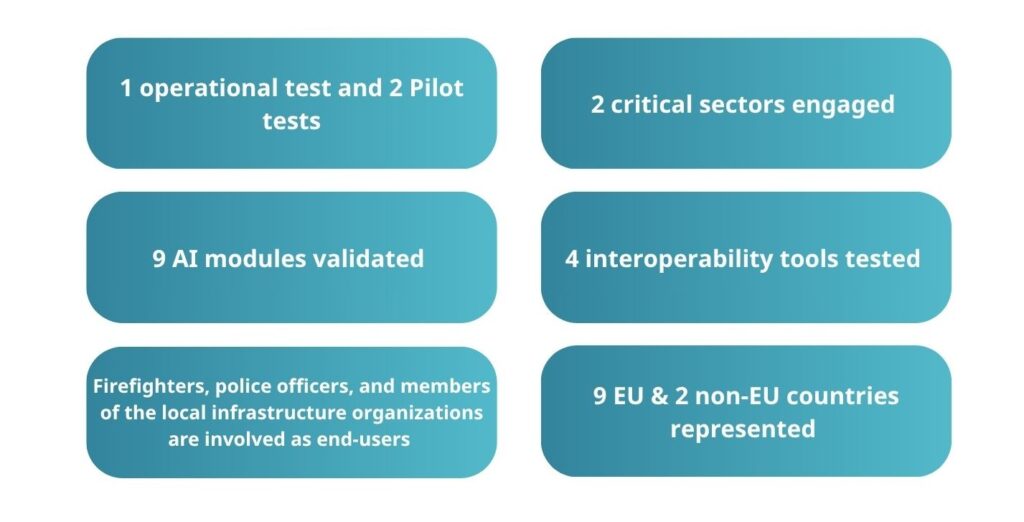
TESTUDO in Numbers
Policy recommendations
Short-term (0-1 year): Establish EU-wide testbeds for AI-enabled protection tools, enhancing usability and interoperability.
Medium-term (1-3 years): Integrate predictive AI into national policies, developing common validation standards for autonomous tools.
Long-term (3+ years): Create cross-sector cooperation platforms to sustain preparedness and align AI certification with resilience frameworks.
Key message
Europe’s critical infrastructure faces increasing risks from climate disruptions and cyber-physical threats. TESTUDO demonstrates that AI-enabled solutions can significantly enhance operational readiness but highlights the need for usable systems, clear accountability, and harmonized EU standards to facilitate practical uptake.
Read the full version of the 2nd Policy Brief here.